 Skip to content
If you have ever typed “how many calories should I eat” into Google, you already know the answer is never simple. Every app gives a different number, every friend has a different opinion, and most generic charts ignore the one thing that actually matters: your body. A TDEE calorie calculator solves this problem by giving you a personal estimate of how much energy your body actually burns in a day, based on your own age, weight, height, sex, and activity level.
In this guide, you will learn exactly what TDEE means, how a TDEE calculator works, how to use your result to lose fat, build muscle, or simply maintain your current weight, and the small details most calculators leave out.
What Is TDEE
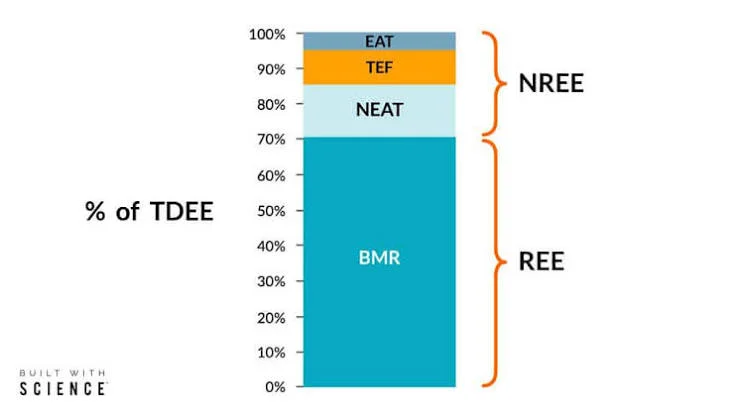
TDEE stands for Total Daily Energy Expenditure. It is the total number of calories your body burns in twenty four hours, counting everything from breathing and digestion to walking, working, and exercising. Think of TDEE as your body’s daily calorie budget. Eat around that number and your weight stays steady. Eat below it and you create a calorie deficit that leads to fat loss. Eat above it and you create a calorie surplus that supports weight or muscle gain.
The Three Parts That Make Up Your TDEE
A good TDEE calculator does not just guess a random number. It builds your total from three separate pieces.
Basal Metabolic Rate
Your Basal Metabolic Rate, or BMR, is the energy your body needs just to stay alive at complete rest. This covers your heartbeat, breathing, brain function, and cell repair. BMR usually makes up sixty to seventy percent of your total daily energy expenditure, which is why it is the starting point of every calculation.
Physical Activity
This includes both planned exercise and everyday movement such as walking, cleaning, or fidgeting, often called non exercise activity thermogenesis or NEAT. Activity can swing your calorie needs by a wide margin, which is why choosing the right activity level in the calculator matters so much.
Thermic Effect of Food
Digesting food itself burns calories. This is known as the thermic effect of food, or TEF, and it usually accounts for around ten percent of your total energy use. Protein has the highest thermic effect, which is one reason high protein diets are often recommended during a cut.
How a TDEE Calculator Works
Most reliable tools calculate your maintenance calories in two steps.
Step one is estimating your BMR using a proven formula, most commonly the Mifflin St Jeor equation, which research has shown to be more accurate for the average adult than the older Harris Benedict formula. If you know your body fat percentage, some calculators use the Katch McArdle formula instead, since it factors in lean body mass rather than total weight, giving athletic or leaner individuals a more precise number.
Step two multiplies your BMR by an activity multiplier that reflects your weekly routine, ranging from sedentary for a desk job with little movement, up to extremely active for daily hard training combined with a physical job.
Using Your TDEE Result
Once you have your daily calorie number, the next step depends on your goal.
For fat loss, most people eat between three hundred and five hundred calories below their TDEE, which supports a steady loss of roughly half a kilogram to one pound per week without sacrificing muscle or energy levels.
For muscle gain, a smaller surplus of around two hundred to three hundred calories above TDEE is usually enough to build lean tissue while keeping fat gain minimal.
For maintenance, simply eat at your calculated TDEE and adjust in small increments as your weight changes over time.
Common Mistakes People Make With TDEE
Many popular calculators rely on outdated shortcuts, like the old idea that a pound of fat always equals thirty five hundred calories. Real research from metabolic scientists has shown the body adapts as you lose weight, so your TDEE actually drops as you get lighter. That means a calorie target that worked in week one may need adjusting by week eight.
Another mistake is guessing your activity level too generously. Most people overestimate how active they really are, which leads to a calorie target that is too high for real progress.
Finally, remember that TDEE is an estimate, not a lab measurement. Treat your first number as a starting point, track your actual weight and food intake for two to three weeks, and adjust based on real results rather than the number alone.
Final Thoughts
A TDEE calorie calculator turns a confusing question into a clear, personal number you can actually act on. Whether your goal is fat loss, muscle gain, or simply understanding your daily calorie needs, knowing your BMR, activity level, and total energy expenditure gives you a realistic foundation to build a diet around. Use the number as a starting point, track your progress, and adjust every few weeks so your plan keeps working as your body changes.